Day 2
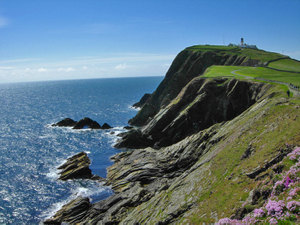
Plan: Since most shops are closed on Sunday I planned to hit the sights open Sunday. If we found Flavour of Shetland interesting we could go there before driving south from Lerwick to Sumburgh Head. On the way to Sumburgh Head we’ll stop at Jarlshof, a prehistorical archaeological site before heading up to the light house to see if we can find any puffins. If time permits stop at Croft House Museum.
On Saturday evening we followed the parade back to town and despite our nap earlier in the evening, still felt worn out. Sleeping that night was difficult. The noise coming from the street sounded as if every one in town was out and about making the most of “simmer dim”. I don’t know if it’s the norm around there but I did happen to noticed that one pub listed closing time as 3:00am (about 1/2 hour before sunrise).
Despite all the revelry, the town hall bells chiming every 15 minutes and the lack of darkness, we woke
up on Sunday morning bright and early for breakfast at 7:30. Over breakfast we discussed the day’s plan and decided to avoid the crowds at Flavour of Shetland and head south to enjoy the wonderful weather.

Our first stop was Jarlshof, a settlement that goes back to prehistoric times. We arrived just after it opened and for about one hour were the only ones there. The site was interesting and I enjoyed visiting the place but I’m not a prehistory buff. I figured this would interest Paul. As you can see it was a beautiful clear morning and I enjoyed the spectacular view from one of the buildings.
When we walked back to the car we noticed a local old guy selling sheep skins and a few knitted items (made by his wife) in the parking lot. We briefly talked. He mentioned how people that raise sheep on the island really don’t make much money and that wool prices weren’t good. I looked through the knitted items but didn’t see anything that caught my eye.
 Our guide book mentioned puffins hang out near the lighthouse so we headed off up the hill in our car. About 1/2 mile from the lighthouse we arrived at a parking area near the gate to the lighthouse. We had to get out there and walk the rest of the way up. It didn’t take long to find the birds. They were just beyond the other side of a short rock wall in front of the lot. At first it was difficult to get close enough for a good picture but when we walked several yards towards a cliff near the gate we got close enough to snap some good photos. Aren’t they cute? It was so fun to watch them land and take off. I later read that it’s best to look for them in the afternoon as they come home to feed the chicks after fishing all day.
At noon we decide to head down and find a place to eat. At the bottom of the hill, near Jarlshof, we popped our heads into the bar at Sumburgh Hotel to see if they had a table available. We got lucky and grabbed the last one as people started streaming in looking for a place to eat.
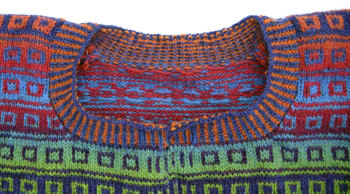
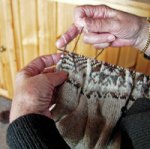 After lunch we head north until we came across one of those signs along the road that pointed the direction to knitwear. The first one that we happened upon was the Shetland Collection. It was Sunday so I wasn’t really expecting it to be open but when we drove up and got out of the car we were cheerfully greeted by the man out front replacing plants in the garden. He fetched his wife who came from the house to opened the shop. It was a small shop but everything in there was so beautiful. Not only did she have Fair Isle garments but she also had the most delicate lace shawls. I mentioned that I was a knitter and she immediately whisked me over to her studio to show me her knitting machines and also how she does handwork using a knitting belt. I was so amazed by her enthusiasm and willingness to spend time chatting about Fair Isle knitting and her work. I just about died when she opened drawer after drawer to a small cabinet that contained Fair Isle swatches (drawer 1, 2, 3, 4, 5, 6) all arranged by color and/or theme. What an inspiration!
In the shop she not only had Fair Isle garments but had some exquisite lace shawls. While talking about lace she mentioned Myrna Stahman’s visit last summer and that the pattern for one of the shawls will be in Myrna’s next book. Well, needless to say, I wanted to buy everything but settled for a couple of fingerless gloves and hats. I could have stayed there much longer but knew Paul was probably ready for something else.
 >We drove up the road a couple of miles and stopped at the Croft House Museum .This Happ Shawl immediately caught my attention. Click on the picture and look closer at how it’s attached to the frame. String is strung through the tips along the border and then the shawl is strung around the pegs on the edge of the frame.
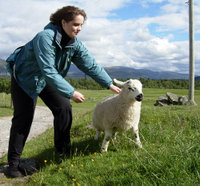
This house (and probably all croft houses) only had a couple of rooms and was very dark. A smoky peet fire was burning when we stepped in which didn’t make it a very enjoyable place to hang out. After taking a quick tour of the house we went on a short jaunt along a small path down to the mill. Plenty of sheep were on either side of the path, doing whatever sheep do. A couple of times I tried to get close but they’d just run away. I don’t know if they’re always so scared of people in general or wise enough to recognize a spinner when they see one. None looked like Shetland sheep.
Since we’d already driven the main road to Lerwick the day we arrived Paul decide to veer left and take a small loop that leads west. We ended up at a picturesque tombolo beach that jets out to St. Ninian’s Ise. A few folks were enjoying the windy weather.

By this time the weather had changed and the sky turned grey. We headed back to Lerwick to find a place to eat dinner.
We eventually ended up at an Indian restaurant and as usual I ordered Chicken Jalfrezi. I was surprised when the waiter kept insisting that the dish I was pointing to on the menu would be to hot for me. He recommended a different Jalfrezi. To this day I’m still puzzled by this. Who in Shetland can eat that dish? I don’t remember seeing many Indians during my visit. Now I regret not ordering it and showing him that there are some white folks that do eat hot food (four – five star hot).
 Just two days after I got home from my trip to Shetland (now two weeks ago) my sister called and asked if she, her kids and my mother could come visit the following weekend. My nephew had qualified for a regional track meet in this area and wanted to drop by. That was last weekend. Last Sunday, I just barely found time to load the first days worth of pictures from our trip.
 On the drive to Lerwick we spotted three signs along the roadside that advertised the way to knitwear studios. It was hard to pass these studios but I also wanted to catch the end of the festival in Lerwick. I kick myself for not stopping when we drove past a crofter sheering a sheep along the side the road. That’s not something I think I’ll ever see again.
 The festival was in full swing when we arrived making it difficult to find a parking spot anywhere near the guest house. We ended up parking at the top of the hill and hauled our backpacks down. Once we checked in and washed up we headed down to Victoria Pier. I was quite shocked to find the place packed with so many people. It was hard to move around between tents to visit the crafts, demos and events. The enthusiasm of the locals was heartwarming but after having travel so long that day, the crowd became overwhelming. We dashed between the dozen or so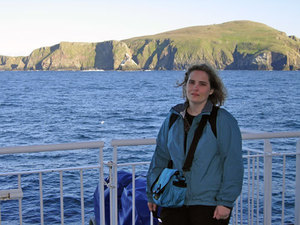


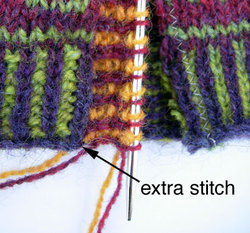

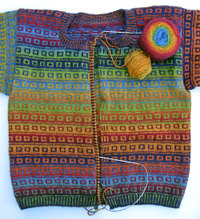 I really wanted to wrap up work on this cardigan before the Nihon Vogue program started last weekend but kept running into trouble with the buttonholes. My last and only encounter with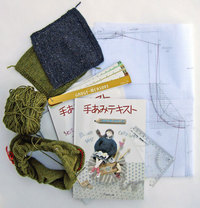

 Purlwise
You must be logged in to post a comment.